Relationship with humans
-

As service animals for the disabled
Some organizations train capuchin monkeys as service animals to assist quadriplegics and other people with severe spinal cord injuries or mobility impairments. After being socialized in a human home as infants, the monkeys undergo extensive training before being placed with a disabled person. Around the house, the monkeys assist with feeding, fetching, manipulating objects, and personal care.
-
In experiments
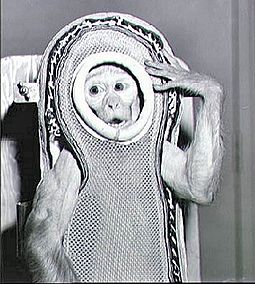
The use of monkeys in laboratories is controversial. Animal rights activists claim that their use is cruel and produces little information of value, and there have been many protests, vandalism to testing facilities and threats to workers.
-
Literature
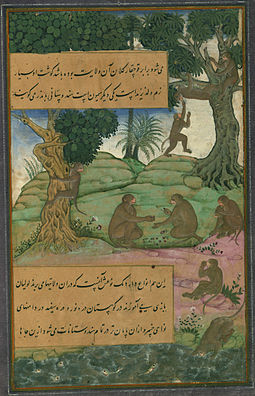
Sun Wukong (the "Monkey King"), a character who figures prominently in Chinese mythology, is the protagonist in the classic comic Chinese novel Journey to the West. Monkeys are prevalent in numerous books, television programs, and movies. The television series Monkey and the literary characters Monsieur Eek and Curious George are all examples.
-
Religion and worship
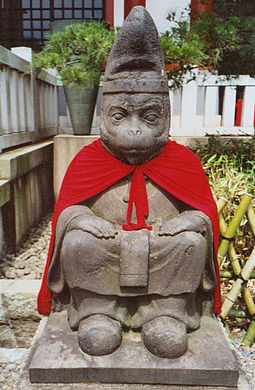
Hanuman, a prominent divine entity in Hinduism, is a Human-like monkey god. He bestows courage, strength and longevity to the person who thinks about him or the god Rama. In Buddhism, the monkey is an early incarnation of Buddha but may also represent trickery and ugliness. The Chinese Buddhist "mind monkey" metaphor refers to the unsettled, restless state of human mind. Monkey is also one of the Three Senseless Creatures, symbolizing greed, with the tiger representing anger and the deer lovesickness. The Mizaru, or three wise monkeys, are revered in Japanese folklore, together they embody the proverbial principle to "see no evil, hear no evil, speak no evil". The Moche people of ancient Peru worshipped nature. They placed emphasis on animals and often depicted monkeys in their art. The Tzeltal people of Mexico worshipped monkeys as incarnations of their dead ancestors.